
Table of Contents
- Why Sustainable Toys Matter in 2026
- Sustainable Toy Materials: What to Look For
- Your Toy Safety Checklist for Eco-Friendly Choices
- How to Verify Sustainability and Safety Claims
- Durability and Long-Lasting Play Value
- Secondhand Toys for Kids: A Smart Sustainable Choice
- Low-Waste Play Ideas for Everyday Families
- Conclusion: Making Intentional Toy Choices
- Frequently Asked Questions
Last Updated: October 15, 2026
Why Sustainable Toys Matter in 2026
Walk into any playroom and you can tell which toys survive past December: plastic novelties crack, battery compartments corrode, and "educational" gadgets hit the donation bin by spring.
At Famlee Nurture, we curate non-mass-produced products across six rooms of family life, and toys sit at the centre of that work.
Toy production is material-intensive, and cheap plastic breaks quickly, driving replacement purchases and waste.
Below: materials, safety checks, verification methods, and a decision framework you can apply in the aisle or online in under five minutes.
Sustainable Toy Materials: What to Look For
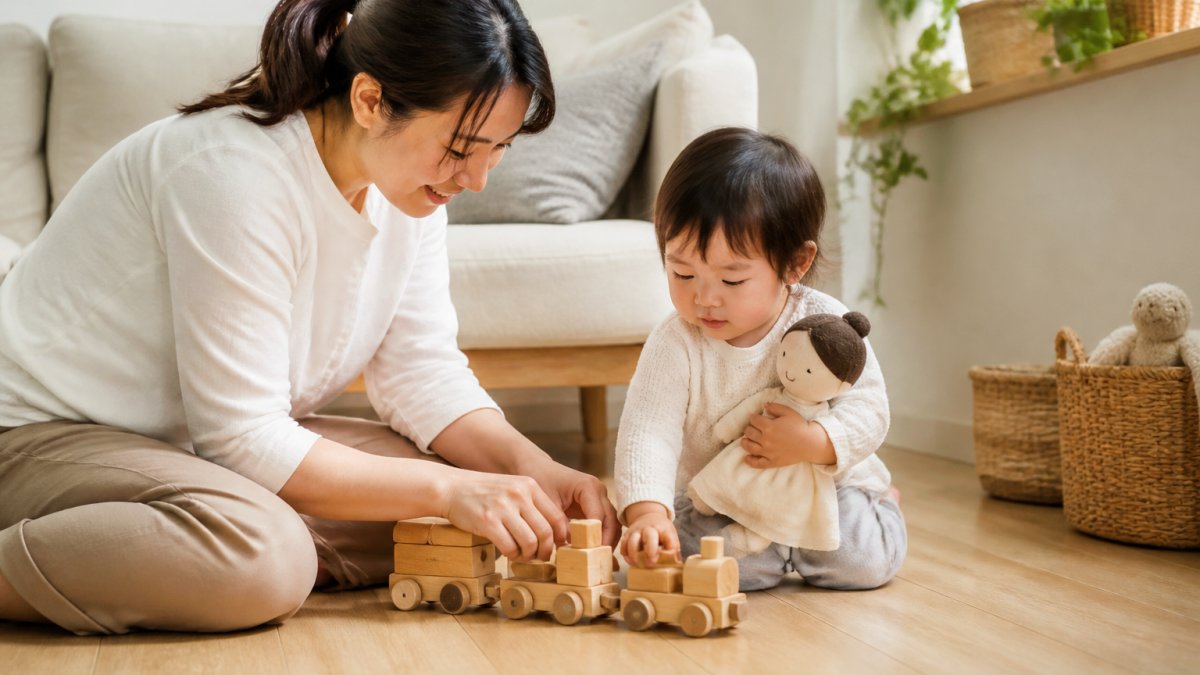
The best sustainable toy materials are solid wood from responsibly managed forests, organic natural fibres, and recycled or recyclable plastics, chosen for durability rather than novelty.
Wood, Organic Textiles, and Recycled Options
Wooden toys top most sustainable shortlists, provided the wood is responsibly sourced. Look for FSC certification, which verifies timber from forests managed to environmental and social standards.
Organic textiles matter just as much for soft toys.
Recycled plastic toys keep material in circulation and can be genuinely durable, though quality varies by manufacturer. Bamboo and food-grade silicone round out the category for teethers and bath toys.
A quick material reference:
| Material | Certification to Look For | Best For | Watch Out For |
|---|---|---|---|
| Solid wood | FSC certification | Blocks, trains, dollhouses | Painted surfaces on cheap imports |
| Organic cotton/wool | GOTS certification | Soft toys, doll clothing | "Natural" claims with no certification |
| Recycled plastic | Third-party recycled content verification | Outdoor and bath toys | Thin walls that crack |
| Bamboo | FSC or organic bamboo certification | Teethers, utensils | Laminated bamboo with hidden adhesives |
| Food-grade silicone | FDA or LFGB food-contact approval | Teethers, sensory toys | Uncertified silicone with fillers |
Your Toy Safety Checklist for Eco-Friendly Choices
A toy safety checklist for eco-friendly choices should cover choking hazards, chemical exposure, construction quality, and age labelling before price or aesthetics. Sustainability without safety is a contradiction, and both checks take about two minutes.
- Confirm the age recommendation matches your child's actual developmental stage, not their birthday
- Check for small parts that fit inside a toilet-paper tube (a choking hazard for under-threes)
- Look for non-toxic finishes: water-based paints, natural oils, no strong chemical smell
Age-Appropriate Safety and Current Regulations
Age-appropriate selection is a safety requirement, not a preference. In the United States, toys for children 12 and under must comply with federal rules covering small parts, lead content in paint and substrate, and phthalates.
U.S. Consumer Product Safety Commission toy safety requirements
For wooden and painted toys, ASTM F963 is the voluntary standard most reputable manufacturers test against, covering mechanical hazards, flammability, and heavy metals in surface coatings.
How to Verify Sustainability and Safety Claims
Verifying a sustainability claim means checking for a specific, third-party certification rather than accepting marketing language. "Eco-friendly," "green," and "natural" are unregulated in toy marketing, and any brand can print them on a box.
Here is a practical verification sequence:
- Look for a named certification, not a slogan. FSC, GOTS, and recognised safety standard marks are verifiable; "planet-friendly" is not.
- Check the certifying body's own database. FSC and GOTS both maintain searchable registries of certified companies.
- Read the material list on the listing, not the marketing paragraph. A toy described as "wooden" that lists MDF or plywood in the specs is engineered wood, which behaves differently and often uses adhesives.
- Search the manufacturer's name in the CPSC recall database before buying, especially for secondhand items.
- Ask the seller directly which standard the toy was tested to. Brands with real testing programs answer this quickly.
Durability and Long-Lasting Play Value
Durability is the most reliable sustainability metric, because the greenest toy is the one you do not replace. A toy that lasts five years has roughly one-fifth the annual environmental cost of one replaced every year. A total-cost-of-ownership lens separates a genuinely sustainable purchase from a green-looking one.
What Actually Makes a Toy Durable
Construction details, not brand claims, determine lifespan. Patterns that hold across categories:
- Solid wood beats particleboard and thin plastic. Particleboard (MDF, plywood) relies on adhesives and swells when wet; thin-walled plastic cracks at stress points.
- Mechanical joints beat glue alone. Screwed or dowelled joints can be tightened; glued joints fail permanently.
- Open-ended design holds attention. Blocks, trains, dollhouses, and art easels let the child supply the scenario, so they stay in rotation far longer than single-purpose electronic toys.
Cost Per Year of Use, Not Sticker Price
The cheapest-looking option is often the most expensive over time. Compare three scenarios:

| Scenario | Upfront | Lifespan | Cost per year | Resale / hand-down |
|---|---|---|---|---|
| Budget plastic set | Low | ~18 months | Higher | Little to none |
| Mid-range plastic set | Medium | ~2-3 years | Medium | Low |
| Solid wood set | Higher | 5-10+ years, multiple children | Lowest | Strong |
Numbers vary by product, but the direction is consistent: durable toys amortise cost across years and often across siblings, and retain resale or hand-me-down value disposable toys do not. Factor in replacing broken parts versus whole toys, and the gap widens.
Repair, Resale, and the End of Life
A toy's sustainability story does not end when your child outgrows it. Three end-of-life paths matter:
- Repair. Wood glue, a clamp, replacement screws, and a light sanding revive most solid-wood toys. Many makers sell spare parts; ask before assuming a toy is disposable.
- Resale or hand-down. Durable toys hold value on resale marketplaces and in parent swap groups. That resale value is effectively a rebate on the original purchase.
- Recycling or disposal. Solid untreated wood can often be composted or recycled depending on local rules; painted or treated wood and mixed-material toys usually cannot. Check local guidance rather than assuming.
U.S. Environmental Protection Agency guidance on reducing household waste
Tiny Land® 3-in-1 Art Easel for Kids →
Secondhand Toys for Kids: A Smart Sustainable Choice
Secondhand toys for kids are one of the lowest-waste options available: no new materials, manufacturing, or packaging. Preloved toys also tend to be the durable ones, since flimsy toys rarely survive long enough to be resold. But secondhand shopping carries a safety and verification burden new purchases do not. Here is how to do it properly in 2026.
Why Secondhand Wins on Lifecycle Impact
A new toy's footprint is front-loaded: raw material extraction, manufacturing, packaging, and shipping all happen before it reaches your home. A secondhand toy skips all of that. The economic case is usually strong too, durable wooden and quality-brand toys often resell at a fraction of retail while retaining years of play value.
The Safety Pass Every Secondhand Toy Needs
Before a secondhand toy enters your home, run this check:
- Search the model in the CPSC recall database. Recalled toys can still circulate through resale and charity shops.
- Check for missing small parts. A set that originally met safety standards may no longer if pieces are lost.
- Inspect plastic for cracks and brittleness. Aged plastic can splinter; discard rather than repair.
- Test seams and joints on soft toys. Loose stuffing or detached eyes are choking hazards.
U.S. Consumer Product Safety Commission recall database
Where to Look, and What to Pay
- Local parent groups and swap meets, you can inspect before buying, which is the single biggest advantage over online resale.
- Charity shops, wooden toys are often priced well below retail; check for missing pieces before committing.
- Online resale marketplaces, filter for brands you already trust and ask the seller for close-up photos of joints, edges, and any painted surfaces.
- Toy libraries, let children rotate toys without ownership, which is the lowest-waste option of all.
Closing the Loop: Donation, Repair, and Resale
When your child outgrows an intact toy, passing it on keeps material in use and out of landfill. Broken wooden toys are often repairable with wood glue and a clamp, another argument for solid construction. Before donating, do a quick safety pass: missing parts, cracked plastic, and worn paint mean repair or recycle rather than passing along a hazard.
The most common secondhand mistake is assuming that because a toy was safe when new, it is safe now. Recalls, missing parts, and material degradation all change the risk profile. Verify before you buy, and verify before you donate.
Low-Waste Play Ideas for Everyday Families
Low-waste play ideas work by reducing the number of objects involved and increasing what children do with each one.
Start with a toy rotation. Keep a third of the toys accessible and store the rest.
Then build play around materials you already own.
Packaging is the other half of the equation. Minimal packaging, recycled cardboard, and plastic-free wrapping reduce the waste that arrives with a purchase.
U.S. Environmental Protection Agency guidance on reducing household waste
Families with children under six who want fewer, better toys rather than a full playroom, and who are willing to rotate rather than accumulate.
Conclusion: Making Intentional Toy Choices
The hard part of sustainable toy shopping is not finding options. It is resisting the volume that makes a playroom feel full while quietly working against everything you are trying to build.
Famlee Nurture curates non-mass-produced toys and home goods across six rooms of family life, with new arrivals every month and free shipping over $50.
If you want toys that survive your children rather than the other way around, start with our curated toy collection.
Frequently Asked Questions
What makes a toy sustainable?
A sustainable toy is made from materials that are responsibly sourced, non-toxic, and built to last. Look for wooden toys from FSC-certified forests, organic cotton with GOTS certification, or recycled plastic. Durability matters too, because a toy that survives years of play creates less waste than a cheap one replaced every season. Packaging also counts: minimal, plastic-free packaging reduces the toy's overall footprint. In 2026, the most sustainable toys combine safe materials, ethical production, and long-lasting design.
Are wooden toys more sustainable than plastic toys?
Wooden toys are often more sustainable when the wood is responsibly sourced and the toy is built to last. Solid wood can be sanded, repaired, and passed down to younger siblings. Plastic toys vary widely: recycled plastic options exist, but many conventional plastic toys break quickly and cannot be repaired. That said, a durable plastic toy used for years can beat a wooden toy that falls apart. The deciding factor is lifespan and material sourcing, not the material alone.
How can I tell whether an eco-friendly toy is safe for my child?
Start with a toy safety checklist: check for small-parts hazards if your child is under three, look for non-toxic paints and finishes, and confirm the toy meets current safety standards. In the US, ASTM F963 and CPSIA are the key benchmarks. Avoid toys with strong chemical smells or loose parts that could detach. For secondhand toys, inspect for cracks, peeling paint, or missing pieces before handing them over. When in doubt, contact the manufacturer for material details.
Are secondhand toys a sustainable choice?
Yes. Secondhand toys for kids extend a product's life, which is one of the most effective ways to reduce toy waste. Preloved toys keep usable items out of landfill and often cost far less than new ones. Check local swap groups, charity shops, and online marketplaces. Before buying, inspect for safety: no loose small parts for toddlers, no lead paint on older items, and no broken edges. Clean thoroughly, and confirm the toy is age-appropriate for your child.
How can I reduce toy waste at home?
Try low-waste play ideas like toy rotation, where you store part of the collection and swap it out every few weeks. This keeps play fresh without buying more. Choose open-ended toys that serve many purposes, such as wooden blocks or a train set. Repair what you can: a loose screw or a worn finish is often fixable. When a toy is truly done, donate it if safe, or check local recycling options for its materials. Buying less but choosing better makes the biggest difference.
0 comments